
The responsible use of environmental resources is a key element of Allreal’s sustainability strategy. The main environmental themes comprise reducing greenhouse gas emissions (Scope 1 and 2), incorporating relevant Scope 3 emissions, increasing energy efficiency, supporting the circular economy and measurably reducing resource consumption with regard to materials, soil and water. These focus areas direct our actions along the value chain and life cycle of a property – from development and realisation through to management.

Net zero
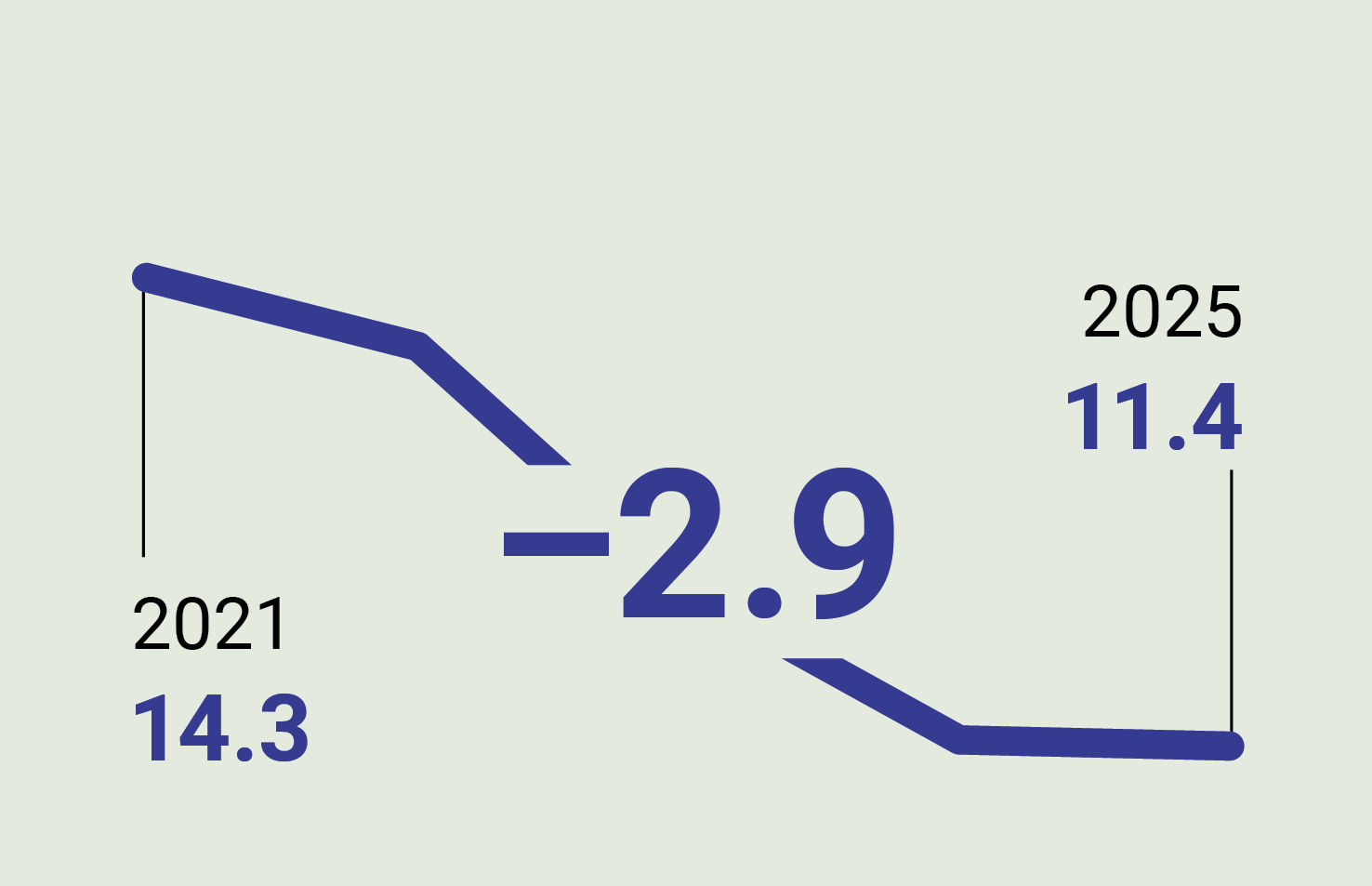
The CO2 reduction path is currently on track with a share of around 52% renewable energy sources in 2025 (taking 2021 as the base; the energy year runs from 1 July to 30 June). Value-enhancing investments in the double-digit millions in renewable energies and efficiency measures are necessary by 2030 to achieve the future goals on the reduction path.
Indirect greenhouse gas emissions (Scope 3.1, 3.2 and 3.5)
The structural recording of indirect greenhouse gas emissions continues to represent a comparatively demanding methodology in the real estate sector. Allreal implemented this approach at an early stage and is continuously developing it in line with industry-wide standards. From this reporting period onwards, we are recording indirect greenhouse gas emissions in accordance with the relevant Scope 3 categories of the GHG Protocol, in particular repair and replacement, new builds and extensive conversions, and demolition.
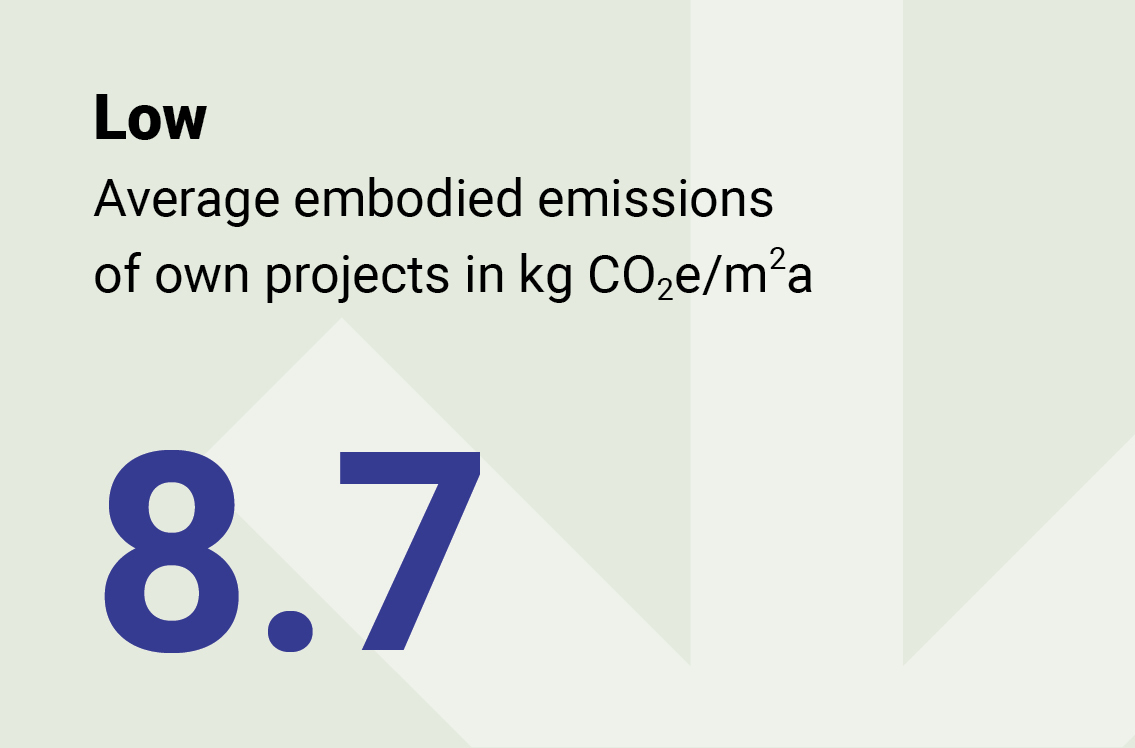
In the 2025 financial year, the average indirect greenhouse gas emissions of ongoing own new-build projects was very low, amounting to 8.7 kg CO₂e per m² and year (based on SIA 2032). The indicator shown represents an average appropriate for each phase that serves as a reference value for reducing indirect greenhouse gas emissions further as part of the climate strategy.
Label strategy and guidelines
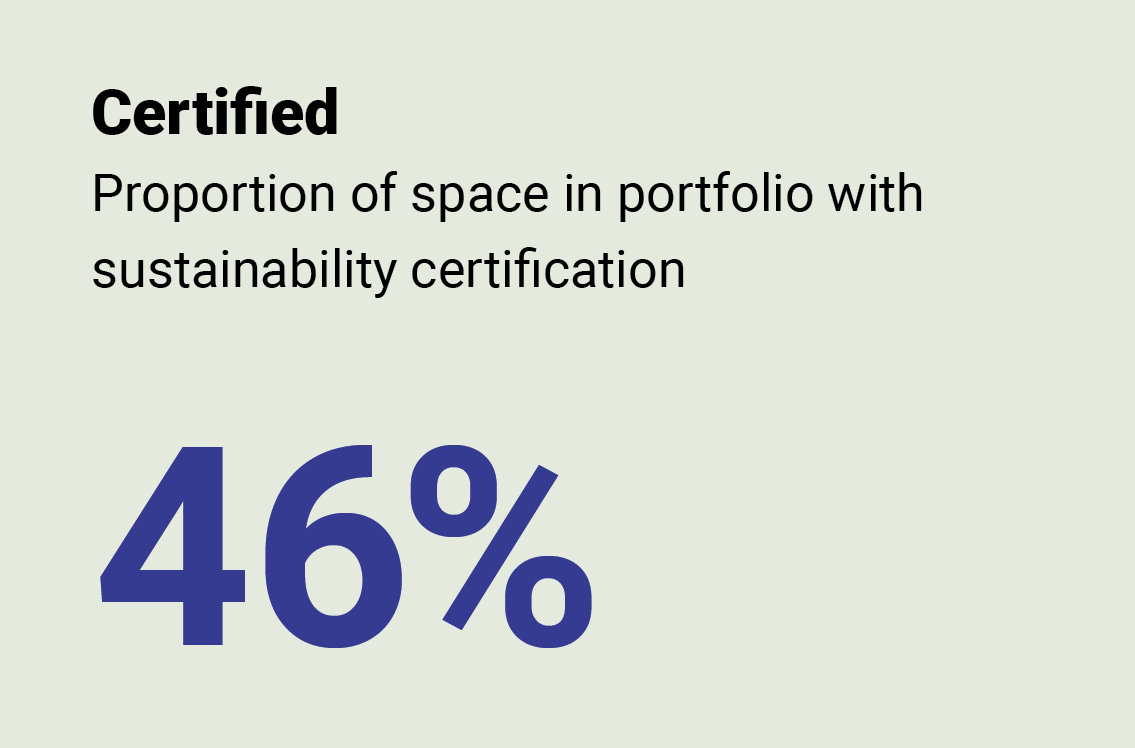
During the reporting year, 27 of Allreal’s properties took part in the pilot phase of the new standard “SNBS – Existing and In Operation”, thereby helping to develop a sector-relevant rating instrument for the property portfolio. In addition, two properties were certified to the German Sustainable Building Council (DGNB) System for Buildings in Use (GiB) Gold standard. Certification was issued for the Baarermatte development project according to the SNBS Site Gold standard.
In systematically implementing our label strategy, we are strengthening the transparency and comparability of the sustainability performance over the entire life cycle of the property and laying the basis for a continuous reduction in greenhouse gas emissions, higher resource efficiency and sustainable value creation.
To our Label-Strategy
Energy consumption and CO2 emissions
Allreal is committed to keeping energy consumption and the associated greenhouse gas emissions low and steadily reducing them. Apart from the structure of a building and its operation, environmental conditions affect the use of heating (and hence energy) in the winter. As Allreal does not make environmental adjustments to consumption data, weather-related fluctuations in energy consumption are directly identifiable in the values shown.
In 2025, a total of 750,259 m² of rentable space or 880,483 m² of energy reference area was included in the energy figures.
In this reporting period, the calculation of the share of renewable energy also included electricity used by the tenant for the first time. This is now 68.3%. Excluding electricity used by the tenant, it comes to 54.3%.
2024: Calculated using the previous method; see 2024 reporting year
2025: Calculated using operational control and data on electricity used by the tenant
It was not possible to reduce greenhouse gas emissions and greenhouse gas intensity year on year. The colder winter period resulted in a higher need for heat and, in turn, higher greenhouse gas emissions. However, the increase in emissions was not in proportion to the heating degree days. Nevertheless, it was significantly cushioned. The main reason for this is the replacement of oil and gas heating with lower-emission systems. As a result of these modernisations, the increase in emissions caused by heat generation (Scope 1, Scope 2 and the pro-rata heat consumption in Scope 3.13) was limited to around 4%.
Additionally, the methodological reclassification of individual consumption data from Scope 1 and 2 to Scope 3.13 is having an impact (in accordance with the operational control approach).
2024: Calculated using the previous method; see 2024 reporting year
2025: Calculated using operational control and data on electricity used by the tenant